
Gas grills rely on a regulator to maintain proper pressure, so when problems arise with low or no flames, the regulator is a likely culprit. In this blog we will go over common symptoms, causes, and solutions to your gas grill regulator problems.
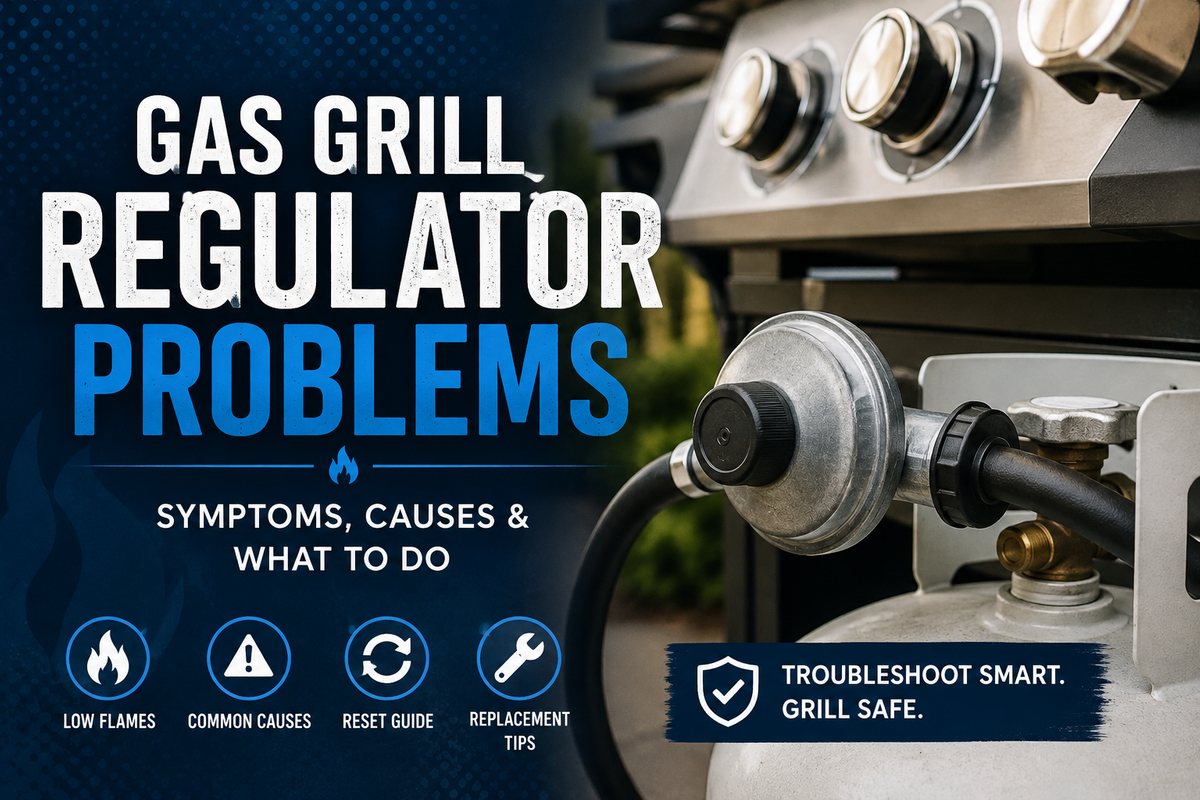
Gas Grill Regulator Problems And Solutions
What Does A Regulator Do?
The propane coming through your grill is stored at a much higher pressure than your grill can safely handle.
The regulator is typically connected to a flexible hose, with the assembly attaching directly to the propane tank. From there, gas travels through the grill's internal gas system to the burners.
Because the regulator controls gas flow, a problem with it can affect the entire grill. That's why it is one of the first things we troubleshoot when a grill won't stay lit. It is important to remember, however, that the regulator is just one part of a more complex whole. Problems with gas flow are not always solved by replacing the regulator.
Common Signs of Gas Grill Regulator Problems
Some of the first signs that your regulator has gone bad are going to be the least noticeable.
First you may find that it takes longer than usual to preheat.
Then it may not quite come all the way up to temp.
Finally, you may experience abnormally low flames or have trouble keeping your burners lit.
Don't go running out to the hardware store just yet! An empty propane tank, blocked burner, damaged hose, or significant grease buildup can cause remarkably similar symptoms.
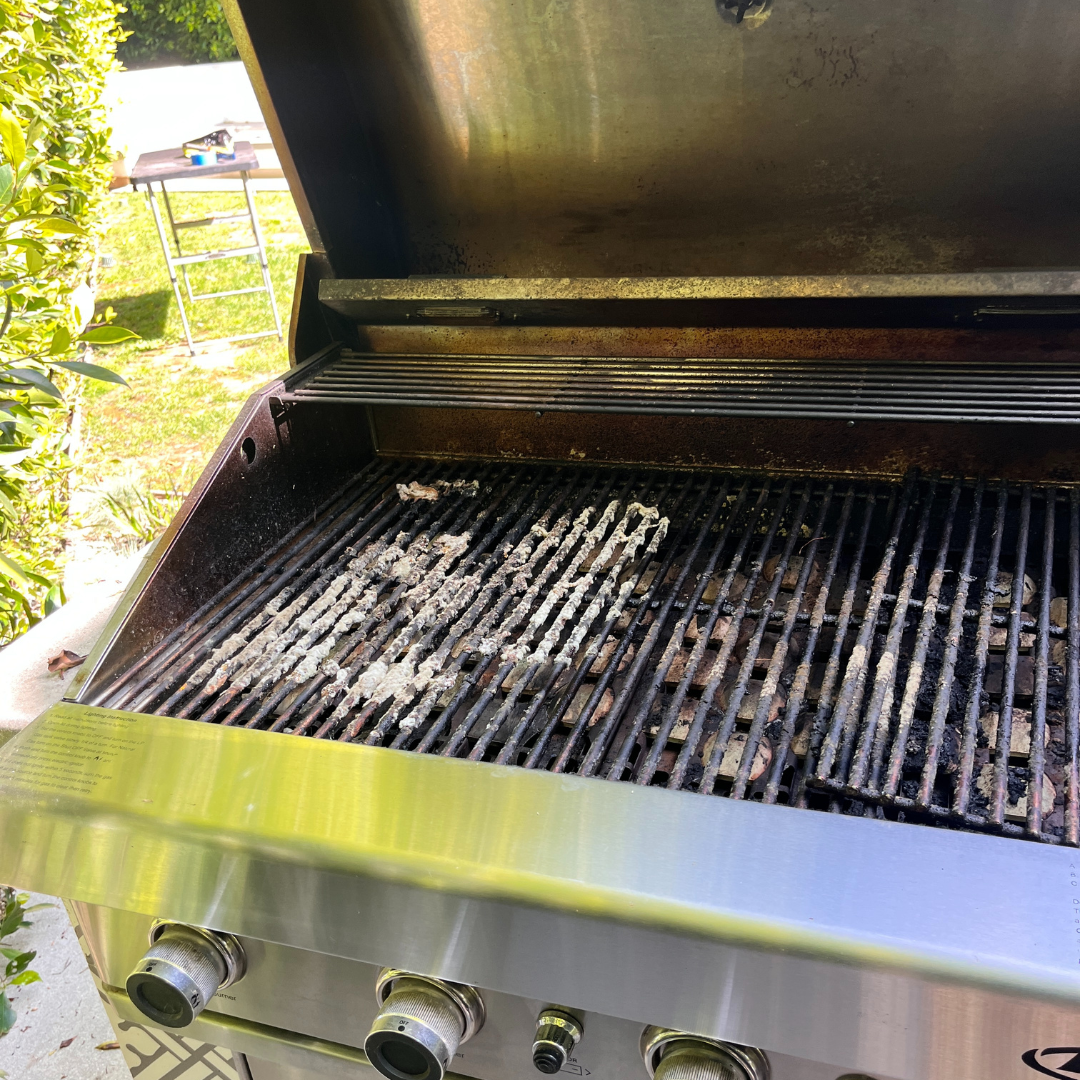
If your grill looks like this, your regulator is the least of your problems!
Why Do Gas Grill Regulators Stop Working Properly?
Why Do Gas Grill Regulators Stop Working Properly?
There are several potential causes of propane grill regulator problems.
The Safety Device Has Been Triggered
Many propane grill regulators incorporate an excess-flow safety mechanism. If the system detects what it interprets as an unusually high flow of gas, it can restrict the amount of gas reaching the grill.
This can happen if the propane tank valve is opened too quickly.
Fortunately, this doesn't necessarily mean the regulator is broken.
The Propane Tank Is Nearly Empty
Before blaming your regulator, check the obvious: make sure the tank actually contains propane.
A nearly empty tank can produce poor performance and may mimic a regulator problem.
The Hose Is Damaged or Kinked
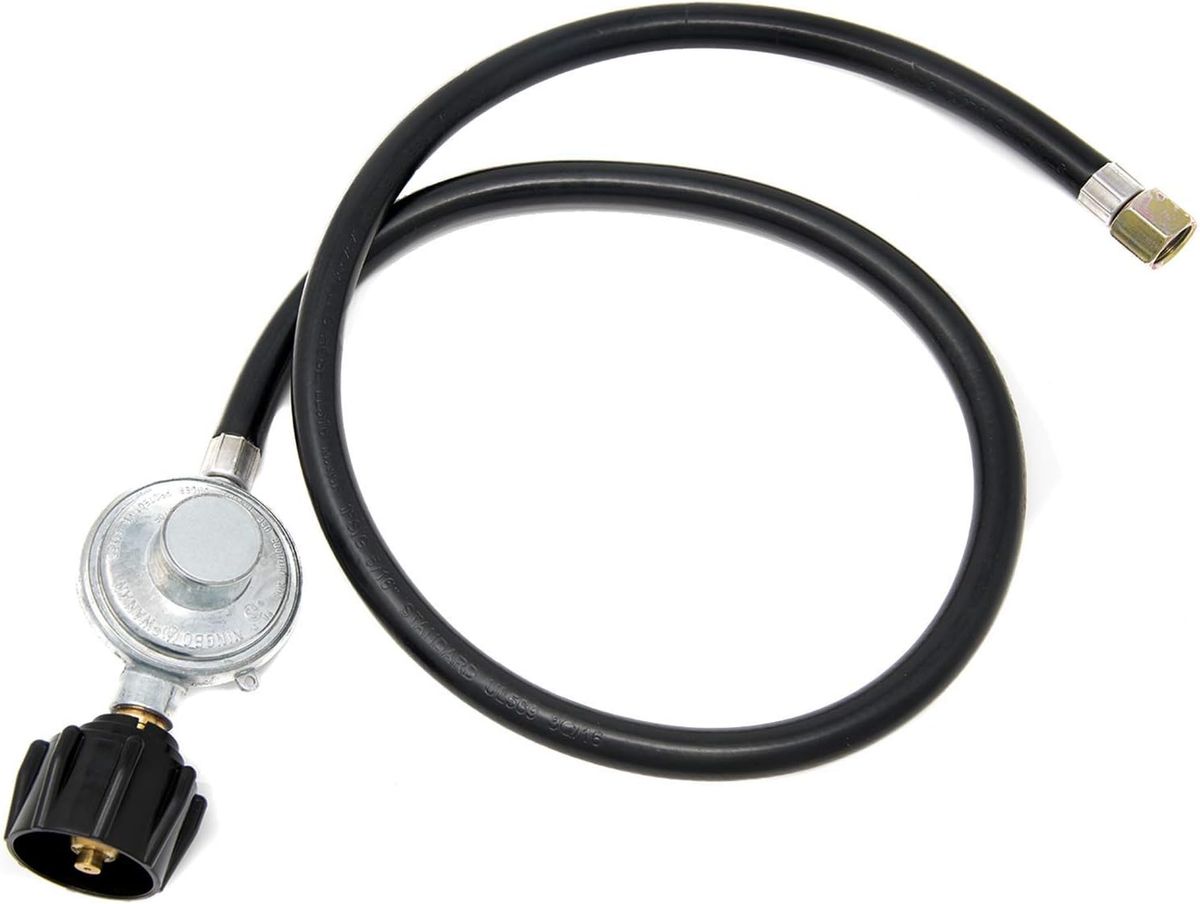
The regulator and hose are often part of the same assembly. A kink, crack, deterioration, or other damage can interfere with gas flow.
Inspect the hose visually, but never use a damaged gas hose.
The Regulator Is Worn or Damaged
Like any mechanical component, regulators can eventually wear out.
Physical damage, deterioration, or persistent problems after basic troubleshooting may indicate that replacement is necessary.
The Grill Is Dirty
This one is easy to overlook.
Heavy grease and carbon buildup around burners and other internal components can affect grill performance. A grill that isn't heating correctly doesn't automatically need a new regulator.
Sometimes it needs a thorough cleaning.
How to Reset a Gas Grill Regulator
If your grill suddenly develops weak flames, the regulator's safety mechanism may have been triggered.
A basic reset may resolve the issue.
Always check your grill manufacturer's instructions first, since procedures can vary between models.
As a general troubleshooting approach:
- Turn off all grill burners.
- Turn off the propane tank valve.
- Wait several minutes with the grill and gas supply turned off.
- Follow the manufacturer's instructions regarding the regulator and hose connection.
- Slowly reopen the propane tank valve.
- Relight the grill according to the manufacturer's normal lighting instructions.
- Check whether the burners have returned to their normal flame height.
The key word here is slowly. Opening the propane valve aggressively can potentially trigger the regulator's flow-limiting mechanism again.
If the grill returns to normal operation, the regulator may not need replacement.
Never bypass, modify, disassemble, or attempt to defeat the safety mechanisms built into a propane regulator.
If you're unsure about the gas system, stop troubleshooting and consult a qualified professional.
When Should You Replace a Gas Grill Regulator?
If resetting the system doesn't resolve the problem, it's possible that the regulator or hose assembly needs replacement.
Look for obvious signs of damage such as:
- Cracked or deteriorated hose
- Damaged regulator housing
- Persistent low gas flow
- Repeated regulator problems
- Physical damage from weather or impact
- Problems that continue after the tank and burners have been ruled out
If replacement is necessary, use a regulator specifically compatible with your grill and fuel system.
Don't assume that a universal-looking regulator is automatically appropriate. Gas pressure requirements and fittings can vary between grills.
Depending on the grill and your experience level, replacing a regulator may be a manageable maintenance task. However, propane systems aren't something to experiment with. If you're uncomfortable working with gas connections, having the work performed by a qualified professional is the safer choice.
Know When to Stop Troubleshooting
Gas-related problems deserve extra caution.
If you smell propane, see a damaged gas connection, suspect a leak, or notice flames where they shouldn't be, stop using the grill immediately and follow your grill manufacturer's safety instructions.
Don't attempt to locate or repair a suspected gas leak with trial-and-error repairs.
A grill is replaceable. You aren't.
Keep Your Grill Performing Its Best
Understanding gas grill regulator problems can save you from replacing parts unnecessarily. A weak flame or grill that won't heat up may be caused by a triggered regulator safety mechanism, an empty propane tank, a damaged hose, dirty burners, or simple lack of maintenance.
Start with the simple possibilities, follow your manufacturer's instructions, and never bypass safety components.
And remember that maintaining the rest of your grill is just as important as maintaining its gas system. Regular cleaning helps prevent grease and carbon buildup from affecting performance while extending the useful life of your grill.
If your grill has accumulated years of buildup and you're not sure where to start, professional grill cleaning can help get the entire cooking system back into better shape.